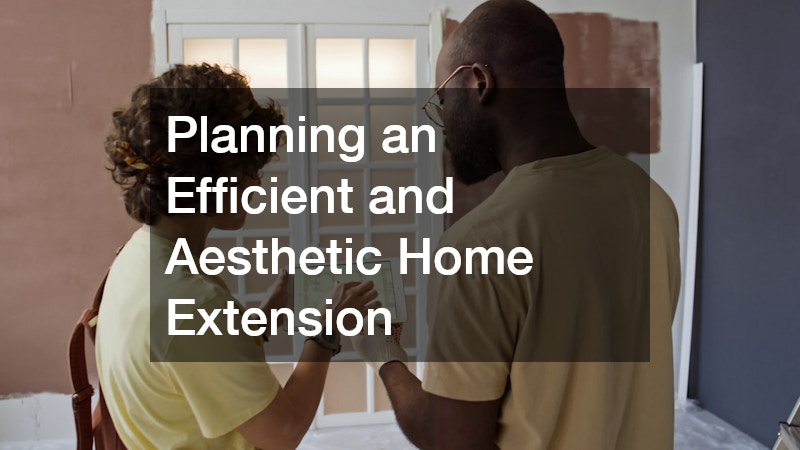
The desire for more space arises naturally from family growth, lifestyle changes, or remote work transitions. When your home no longer suits your routine, you face a choice: sell your home or expand it. Building an extension lets you tailor your environment precisely to your needs. However, expanding your home can be daunting, requiring a balance between engineering efficiency and architectural design. The mistake many homeowners make is viewing an extension as an isolated box added to the house. A successful addition should never appear as an afterthought; it must blend seamlessly with the original structure while enhancing functionality. Achieving this involves navigating complex phases, from zoning laws to final touches.
Navigating Zoning Laws and Architectural Symmetry

Before selecting a finish sample or paint swatch, ensure your extension complies with municipal regulations. Zoning ordinances define what, where, and how high you can build. Ignoring these can lead to expensive redrafts or denials from building boards. To guarantee legal and structural compliance, follow these foundational practices:
- Investigate Property Setbacks and FAR Caps: Every municipality establishes setbacks, which are the mandatory distances a structure must keep from front, rear, and side property lines. Additionally, check your local Floor Area Ratio (FAR), a metric that limits the total square footage of your home relative to the size of your lot.
- Analyze Your Existing Architectural DNA: Take note of your home’s roof pitch, exterior siding materials, and foundational lines. An extension that shifts from a colonial clapboard to a modern flat-roof concrete design without a transition strategy will appear disjointed and affect property value.
- Match Exterior Details Exactly: Ensure your builder matches the mortar color of existing brickwork, the exposure width of your siding, and the fascia profiles. Even small details, like matching the depth of the roof eaves, contribute enormously to making the addition look original to the home.
Selecting Your Construction Team
Once you have a firm grasp of what your property allows, the success of your build rests heavily on the team you select to execute the vision. While some homeowners attempt to manage subcontractors independently, a complex addition demands professional oversight to protect your investment.
- Choose the Right Project Delivery Method: Evaluate if your project benefits more from an architect-led design with an independent builder or a design-build firm handling both phases. Design-build firms often provide tighter cost control, while independent architects offer highly bespoke creative solutions.
- Perform Rigorous Contractor Vetting: When interviewing remodeling contractors, do not let price be your sole deciding factor. Demand a portfolio of completed structural additions, request contact information for three recent clients, and verify that they carry comprehensive general liability and workers’ compensation insurance.
- Establish a Clear Milestones Schedule: A healthy contract ties payments to verifiable physical milestones—such as foundation pouring, framing completion, and rough-in approvals—rather than arbitrary calendar dates. This ensures the project progresses and that you only pay for inspected work.
Maximizing Natural Daylighting and Structural Insulation
An extension offers an opportunity to correct the architectural shortcomings of your older home, particularly in capturing natural light. Older homes often have smaller, compartmentalized rooms that feel dark and closed off. Adding a new zone allows you to design a bright, airy environment that lifts your mood and reduces reliance on artificial lighting during the day. Achieving this requires a strategic approach to window placement and thermal boundary design:
- Track the Path of the Sun: Analyze how light moves across your lot throughout the absolute peaks of summer and winter. South-facing windows provide a steady, warm glow all day, whereas east-facing windows fill a morning breakfast nook with intense light but leave it cool and shaded by the late afternoon.
- Utilize High-Performance Glazing: Large expanses of glass can become a source of thermal loss or unwanted solar heat gain. Specify double or triple-pane glass with low-emissivity film, allowing light through while reflecting ultraviolet rays and radiant heat outside.
- Prioritize Specialized Flashing Techniques: Water penetration is the leading cause of structural rot around new windows. It is critical to work with experienced window contractors who understand the nuances of self-adhering flashing tapes and proper sill pan drainage, ensuring that wind-driven rain can never seep behind your exterior siding.
Balancing Thermal Systems

As your walls take shape and your windows are sealed, your focus must expand to the invisible climate that will fill the new space. Adding hundreds of square feet to your home alters the physics of your indoor environment, requiring an smart strategy for air distribution and thermal comfort.
- Perform a Manual J Load Calculation: Never allow a builder to estimate the heating and cooling needs of your new addition based solely on square footage. A proper HVAC calculation considers your specific insulation values, wall orientations, and window surface areas.
- Evaluate Your Existing System’s Capacity: Your current heating and cooling equipment was sized specifically for your original footprint. Forcing it to condition a brand-new wing can overwork the compressor, spike your energy bills, and leave both the old and new sections of your home completely uncomfortable.
- Explore Zone-Specific Ventilation Options: If extending your original ductwork proves too disruptive or architecturally impossible, consider alternative solutions. Consult with professionals who specialize in HVAC services to evaluate ductless mini-split systems, which allow you to control the temperature of your new extension completely independent of the rest of the house.
Mapping Out Wet Walls and Waste Lines Early
The beauty of a home extension is undermined if the infrastructure cannot support your modern lifestyle. When a floor plan includes a kitchen expansion, a master suite bath, or a main-floor laundry room, water delivery and waste removal mechanics must be integrated into the structural engineering from the start. Plumbing cannot be easily retrofitted around structural beams without major compromises. To ensure your utilities operate efficiently and silently, focus on these critical infrastructure tips:
- Respect the Laws of Gravity: Drainage lines require a downward slope of a quarter-inch per foot to transport waste safely to the main sewer line. Whenever possible, align your new wet walls back-to-back with existing bathrooms or stack them directly above a basement utility zone to minimize the need to cut through foundational joists.
- Account for Venting and Air Pressure: Every individual drain requires a corresponding vent stack that exits through the roof to prevent dangerous sewer gases from entering your living spaces. Work closely with a certified plumbing contractor to map out these vent paths early, avoiding ugly, unplanned bulkheads in your beautifully designed ceilings.
- Insulate Drain Lines for Sound Dampening: Plastic waste pipes can create an annoying, loud rushing sound whenever a toilet is flushed upstairs. Insist that your team wraps these lines in heavy acoustic insulation or utilizes cast-iron drop pipes inside interior walls to maintain acoustic peace.
Maximizing the Life of Core Utility Equipment
Beyond the basic movement of waste and water, your home extension demands a fresh look at the quality and temperature of the utilities entering the property. Increasing your fixtures means increasing your demands on the heart of your home’s utility room.
- Assess and Protect Your Overall Water Quality: A large addition often introduces luxury multi-head showers or high-capacity appliances that are highly sensitive to mineral buildup. Take this opportunity to safeguard your entire plumbing investment by integrating a whole-house water filtration system to eliminate scale, chlorine, and sediment right at the main shutoff valve.
- Verify Your Heating Appliance Lifecycle: If your home relies on a central boiler or a forced-air furnace, check its age and output capacity. An extension provides the perfect moment to transition to high-efficiency zoning, which ensures your new rooms reach their target temperatures quickly without draining resources from the older parts of the house.
- Size New Equipment for Long-Term Demand: When your current heating system is nearing the end of its functional life, extending it is counterproductive. Instead, plan a dedicated heating upgrade that features a tailored heater and furnace installation designed specifically to handle the thermal load of the expanded footprint, allowing you to run your home with maximum fuel efficiency.
Designing Smart Storage That Complements the Architecture

An efficient extension is one where every square foot has a clear, predefined purpose. Often, homeowners create a large open room and realize there’s no storage for everyday items, leading to clutter. Built-in storage should be a fundamental architectural element shaping the room’s flow and function. To make storage practical and visually striking, apply these interior design principles:
- Exploit Architecturally Dead Space: Look for structural cavities that naturally occur during a build, such as the recess beneath a new staircase or the wall depth between framing studs. These areas are ideal for recessed shelving, hidden tech charging stations, or pull-out utility pantries.
- Extend Storage Vertically to Elongate the Room: Low furniture chops up a room visually, making it feel smaller than it actually is. By installing floor-to-ceiling custom cabinets, you draw the eye upward toward the ceiling, creating an illusion of grandeur while maximizing your storage capacity per square foot.
- Conceal Technology and Cable Clutter: Design your cabinetry with dedicated wire management channels, ventilated media closets, and flip-down panels to completely hide routers, gaming systems, and tangled power cords from sight.
Sculpting Flow and Functionality with Surfaces
In large, open extensions, storage elements also serve a secondary purpose: defining distinct functional zones without building restrictive, light-blocking walls. This is particularly true in areas meant for cooking, dining, and casual entertaining.
- Establish Visual Boundaries with Islands and Bars: Use a long, continuous kitchen island or a raised dry bar to physically separate the heavy action of a cooking zone from the relaxed energy of a living area, keeping guests close to the conversation but out of your workspace.
- Select Material Surfaces Based on Actual Daily Wear: The horizontal surfaces in your extension will take the brunt of daily life. Avoid delicate, highly porous stones in high-traffic zones where kids, keys, and spilled drinks are common occurrences.
- Partner with Professional Surface Fabrication Specialists: To ensure your surfaces look flawless and stand the test of time, secure a dedicated countertop service to handle the precise template modeling, seam placement, and undermount sink cutouts, resulting in a durable finish that anchors your room’s aesthetic.
Selecting a Cohesive Color Palette and High-Performance Finishes
This phase of a home extension is where the architecture becomes an inviting, livable home. If a guest steps out of your original hallway into your new extension, there should be no jarring contrast in style, texture, or execution. The transition should feel smooth and balanced. Use these professional painting strategies to achieve a sophisticated finish that ties your entire home together:
- Implement the Classical Interior Proportion Rule: Use a color distribution strategy based on sixty percent dominant color, thirty percent secondary color, and ten percent accent color. Apply your dominant tone to the main walls, use the secondary color on large upholstery or accent walls, and reserve the boldest color for small decor elements.
- Bridge the Old and the New with Consistent Trim: One of the easiest ways to unify two different construction eras is to use identical baseboards, crown moldings, and window casings throughout the entire transition zone, painted in a single, matching white or neutral satin finish.
- Rely on Professional Preparation and Application: A premium paint job is eighty percent preparation and twenty percent application. By hiring an experienced interior painting contractor, you ensure that every drywall joint is perfectly smooth, nail holes are completely filled, and premium primers are applied to prevent uneven sheen or peeling down the road.
Managing Year-Round Air Dynamics

With your walls beautifully finished and your aesthetic locked in, your final task is to look toward the changing seasons. An extension must remain an oasis of comfort whether it is facing a winter blizzard or the oppressive humidity of mid-summer.
- Understand the Impact of Increased Air Volume: A larger home holds a much larger volume of air that must be continuously circulated to prevent stagnant zones, moisture buildup, and uneven hot spots.
- Optimize Air Movement Patterns: Ensure your return vents are placed correctly to pull old air out of the room efficiently, and position ceiling fans strategically to help push conditioned air down into the living zone during warmer months.
- Invest in Independent Summer Cooling Systems: When the heat spikes, your new addition will face intense solar exposure. Ensure your summer comfort by prioritizing modern ac replace and installs, giving you a highly responsive cooling system that keeps the entire expanded layout crisp and comfortable without breaking the bank.
Planning a home extension efficiently and aesthetically transforms your living space. It requires attention to both visible design and mechanical systems. By addressing zoning restrictions early, carefully choosing your build team, and planning plumbing and climate control, you avoid stressful surprises in major renovations. Balancing structural efficiency with aesthetic choices creates a cohesive addition that complements the original home. Storage becomes seamless, light permeates every corner, and the climate stays balanced through all seasons. With deliberate planning, your extension will be a functional and inspiring sanctuary for years.